Mode sombre

Découvrez le nouveau rapport du Human Adaptation Institute, consacré aux impacts de la chaleur sur les populations

Découvrez le nouveau rapport du Human Adaptation Institute, partenaire de notre association,  consacré aux impacts de la chaleur sur les populations. Financé par la BEI et fondé sur un programme de science participative, il analyse la manière dont les Européens vivent les vagues de chaleur.

La méthode

Les données utilisées dans ce rapport son issus d’une enquête menée en 2024 par Human Adaptation Institute en France comme phase de test des questionnaires et du suivi. 

La collecte de données principale a été menée auprès de répondants de France, Espagne et Pologne en plusieurs étapes. 


Chaleur : des impacts sous-estimés et une société insuffisamment préparée

Les impacts de la chaleur surviennent à des seuils bien plus bas que ceux traditionnellement étudiés. Selon le rapport ,  dès 24°C en moyenne sur 24 heures ou au-delà de 32°C pendant quelques heures, les effets physiques, cognitifs et sociaux deviennent significatifs. Lors de la canicule d’août 2025, 68 % des Français ont vu leur sommeil fortement dégradé, avec des risques accrus de fatigue chronique en cas d’épisodes prolongés.

La chaleur affecte également le travail : 46,5 % des personnes déclarent une baisse de motivation et de capacité, tandis que perte de concentration et irritabilité augmentent nettement. À plus long terme, 30 % des Français envisagent un déménagement en raison de la chaleur, et 37 % souhaitent changer de logement pour mieux se protéger, révélant un risque croissant de mobilités internes.

Si 93 % de la population anticipe une hausse des températures dans les prochaines années, beaucoup peinent à se projeter dans des scénarios extrêmes, ce qui limite la perception du risque. Les inégalités renforcent fortement la vulnérabilité, notamment pour les femmes et les ménages modestes.

Le rapport montre que les attentes envers l’action publique sont élevées : seuls 23 % jugent les politiques actuelles suffisantes, tandis que la majorité plébiscite l’adaptation des horaires en période de canicule, l’ouverture prolongée de bâtiments rafraîchis et le développement d’espaces verts urbains. Autant de mesures qui appellent des décisions rapides face à un phénomène désormais structurel.

A propos du Human Adaptation Institute
Human Adaptation Institute est un groupe de recherche dirigé par l’explorateur-chercheur Christian Clot, spécialisé dans l’étude du comportement humain en conditions réelles. Parmi ses projets les plus remarquables figurent les expéditions « 4×30 jours », consacrées à l’analyse des réponses cognitives humaines face à des environnements extrêmes.

En savoir plus

About Nina

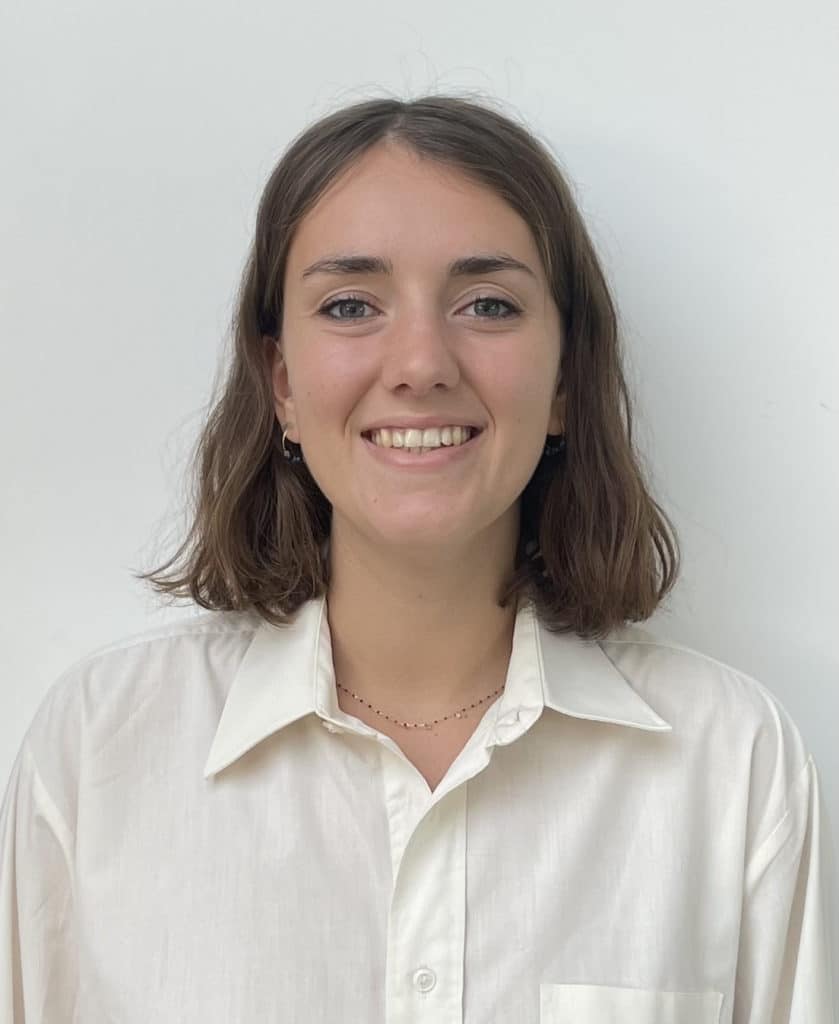
A student at Sciences Po Paris, enrolled in the Master’s program in Territorial and Urban Strategies, Nina is interested in public policies at the territorial level as well as the challenges of ecological transition.

As part of a student project during her first year of the Master’s program, she worked with the National Housing Agency (Anah) on eco-design in urban renovation. She then took a gap year to gain more professional experience, completing two internships: the first with the City of Paris, where she contributed to the implementation of the first plan to combat energy poverty, and the second with the Paris Urban Planning Agency (Apur), where she worked on the territorialization of public health.

Currently in her second year of the Master’s program, she is beginning an apprenticeship with the association France Villes et Territoires Durables.


About Solène

Mission Officer, Working Group, and Projects. Student at the Urban School of Sciences Po Paris, focusing on the ecological transition of cities.

About Quentin

Motivated by climate issues and planetary boundaries, Quentin decided to study land use planning at the Ecole Nationale des Ponts et Chaussées. His experience in associative field at the Fresque du Climat, helped him to better understand the stakes of the ecological bifurcation. Between his native Haute-Savoie and his home town Rennes, where he gained expertise in mobility and sustainable agriculture, he is now based in Paris to deploy the Sustainable City by France’s territorial workshops throughout the country.

About Alice

After five years’ study at Sciences Po Lyon, with a specialization in territorial transitions, Alice joined Sustainable City by France (France Villes et territoires Durables). She actively contributes to the deployment of the association’s territorial workshops and working groups.
See her LinkedIn profile 
Photo-circulaire-tara

Currently studying as a second-year Master’s student in International Relations at University Paris 1 Panthéon-Sorbonne, Tara holds a Bachelor’s degree from INALCO, with a double-major in Hindi language, and International relations / Environmental studies. Her work with us is in line with her former experiences at UNESCO and the Ministry of Europe and Foreign Affairs, thus deepening her professional expertise in the field of environmental diplomacy and international cooperation for sustainable development.

See her LinkedIn profile

Photo-circulaire-carla

She holds a Master’s degree in Development Economics from the Panthéon-Sorbonne University and is currently studying for a Master’s degree in International Relations and Action Abroad at the same university. She approaches the problems of sustainable cities and territories through these different perspectives and her international experiences.

About Isabelana

Isabelana is a Mexican journalist who holds a Master’s degree in Digital Communication and Data Analysis from the Sorbonne University. She previously worked in communication and press relations in the cultural sector in France and Mexico. Today, she is interested in ecological actions and solutions to preserve the environment and the biodiversity.

About Camille

camille photo
With a background in social sciences, art history and architecture, Camille has worked in communication within the VINCI group: from major international projects to La Fabrique de la Cité, a think tank dedicated to urban foresight.

About Alexandra

A geographer by training (Saint Petersburg State University), she started as a geographer and economist at the Academy of Agricultural Economics (Russia), before pursuing her career in France as an administrative and accounting assistant (Air Liquide, Association TGV Provence Côte d’Azur, COFHUAT, Groupe Hervé)

About Marion

Trained in international and European affairs between England and France as part of a double degree at Sciences-Po Lille / University of Kent, Marion started her career in advocacy and institutional relations of non-governmental organisations, in the fair trade sector (Max Havelaar France label). Her experiences are also linked to territories, with a passage in decentralised cooperation at the level of a departmental council.

About Sébastien

Before joining the SCbF team, he held several positions in local government management. From elected official and deputy mayor of his native city Besançon, in charge of university relations and international cooperation, to Director of Economic Development of the City of Pantin, to Chief of staff in Montreuil – where he notably piloted the in-depth redesign of the urban project towards more ecology and sustainable development – he continued his career as Senior Resilience Officer of the City of Paris.
He promotes a holistic and systemic vision of sustainable development and brings his expertise in territorial resilience, ecological and social transition.