Mode sombre

Université Populaire des Transitions (UPT) – Découvrez les temps forts

Organisé par Terres d’Argentan, l’Université Populaire des Transitions est un cycle de conférences dédié à des problématiques spécifiques telles que la biodiversité, les ressources, la santé, les limites planétaires ou encore l’aménagement des territoires. 

France Villes & territoires Durables a contribué à plusieurs sessions de ce cycle incontournable. 

Découvrez nos temps forts ! 

« Activité humaine, climat et limite planétaire » - 2 mai 2023

Quels sont les défis de notre territoire face aux dérèglements climatiques ? Pourquoi est-il important de revoir nos représentations et nos pratiques ? Par quoi commencer, individuellement et collectivement ?

Avec l’intervention de Sébastien Maire, Délégué général de France Villes & territoires Durables 

« Eau et végétal, question centrale et partagée » - 17 mai 2023

L’eau est une ressource qui se raréfie. Notre territoire n’est pas épargné, mais où en est-on exactement ? Il est important de ne pas attendre les pénuries et d’agir dès maintenant. Quelles solutions sont déjà en place ? Quel est le champ des possibles pour les habitants, les entreprises, les collectivités, les agriculteurs ?

2h d’échanges avec un spécialiste d’envergure nationale et une table ronde d’acteurs locaux avec leurs solutions concrètes et inspirantes.

« Réparer la ville » - 28 septembre 2023

Jardins suspendus, voitures volantes, immeubles de verre, maisons intelligentes… Fantasme t’on encore la ville comme autrefois alors que de nouvelles questions s’y posent :

Que devraient faire les villes pour mieux affronter les vagues de chaleur à venir ? Seront-elles encore habitables en 2050 ? Alors que nous sommes encore aux prises les enjeux d’aujourd’hui : mal-logement, difficulté à se déplacer… comment les villes peuvent-elles faire face aux enjeux de demain ?

« Protéger la biodiversité : pourquoi s’y intéresser ? » - 3 octobre 2024

La notion de « biodiversité » est très récente. Elle ne date que de 1992. Et pourtant elle s’est fait une place de choix dans les débats et les prises de décision. Certains en ont fait un critère de destination touristique, de qualité de vie ou de santé… D’autres une question d’éthique.

Alors, si la biodiversité, c’est aussi « nous »… comment organiser une prise de conscience et créer une mobilisation collective, voir de nouvelles coopérations inspirantes ?

« Qualité des relations sociales et humaines : l’enjeu du siècle ? » - 30 janvier 2025

Nous vivons un siècle d’extrême sollicitation et d’accélération des échanges. Le numérique abroge les distances. Les réseaux sociaux nous plongent dans l’immédiateté. Il n’a jamais été aussi simple de s’informer, d’échanger, d’être contacté. Et pourtant nous n’avons jamais été aussi seuls. Les foyers réduisent leur taille. Selon l’Organisation Mondiale de la Santé, un adulte sur trois dans le monde dit se sentir seul.

Dans nos territoires ruraux, le vieillissement de la population implique souvent isolement social et géographique. Et si notre capacité à cultiver la convivialité sur notre territoire local rebattait les cartes de l’attractivité ?

« Croissance verte, décroissance… quels métiers, filières et emplois pour nos territoires ? » - 5 juin 2025

Le 19ème siècle a été marqué par la révolution industrielle. Le 20ème siècle par la société de consommation avec à la clé un prélèvement fortement accru et insoutenable des ressources naturelles. Dans ce contexte, plusieurs concepts sont apparus : économie circulaire, économie sociale et solidaire, croissance verte, décroissance, développement durable, etc.

Alors, à quel modèle économique faut-il se vouer ? Pour quels résultats sur le terrain et pour les territoires ? Avec quelles opportunités pour les habitants ? Une soirée pour changer de regard sur l’avenir économique de notre territoire à l’aune des transitions.

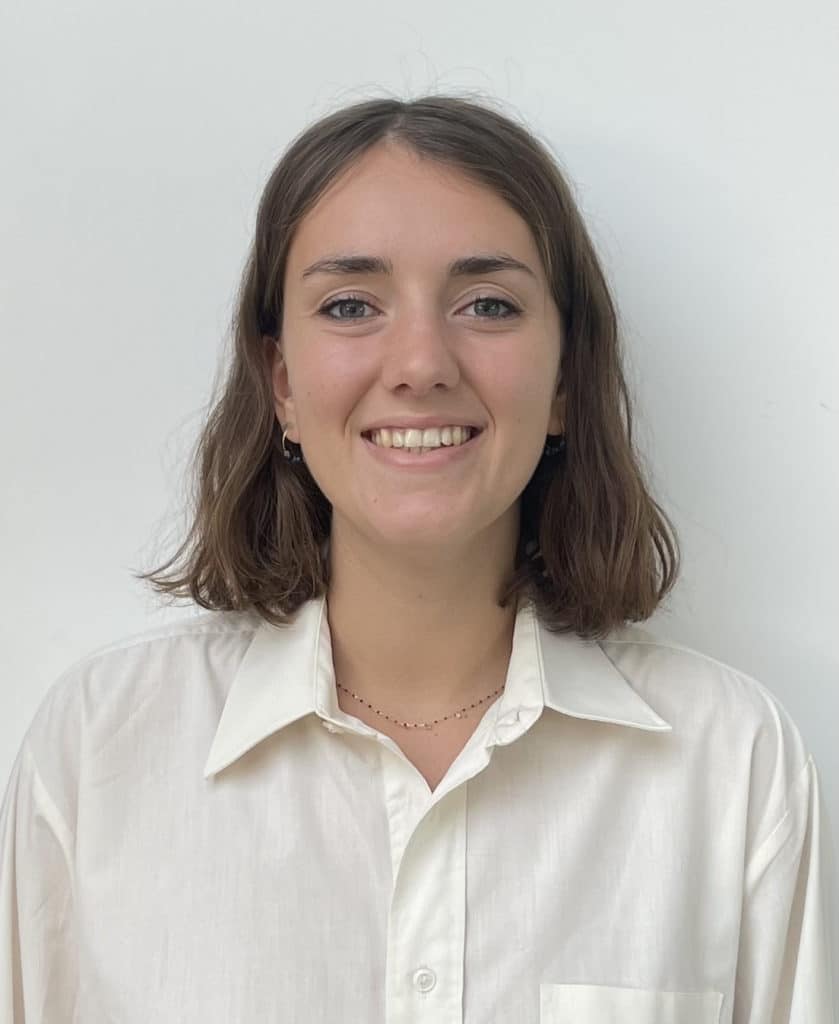
About Nina

A student at Sciences Po Paris, enrolled in the Master’s program in Territorial and Urban Strategies, Nina is interested in public policies at the territorial level as well as the challenges of ecological transition.

As part of a student project during her first year of the Master’s program, she worked with the National Housing Agency (Anah) on eco-design in urban renovation. She then took a gap year to gain more professional experience, completing two internships: the first with the City of Paris, where she contributed to the implementation of the first plan to combat energy poverty, and the second with the Paris Urban Planning Agency (Apur), where she worked on the territorialization of public health.

Currently in her second year of the Master’s program, she is beginning an apprenticeship with the association France Villes et Territoires Durables.


About Solène

Mission Officer, Working Group, and Projects. Student at the Urban School of Sciences Po Paris, focusing on the ecological transition of cities.

About Quentin

Motivated by climate issues and planetary boundaries, Quentin decided to study land use planning at the Ecole Nationale des Ponts et Chaussées. His experience in associative field at the Fresque du Climat, helped him to better understand the stakes of the ecological bifurcation. Between his native Haute-Savoie and his home town Rennes, where he gained expertise in mobility and sustainable agriculture, he is now based in Paris to deploy the Sustainable City by France’s territorial workshops throughout the country.

About Alice

After five years’ study at Sciences Po Lyon, with a specialization in territorial transitions, Alice joined Sustainable City by France (France Villes et territoires Durables). She actively contributes to the deployment of the association’s territorial workshops and working groups.
See her LinkedIn profile 
Photo-circulaire-tara

Currently studying as a second-year Master’s student in International Relations at University Paris 1 Panthéon-Sorbonne, Tara holds a Bachelor’s degree from INALCO, with a double-major in Hindi language, and International relations / Environmental studies. Her work with us is in line with her former experiences at UNESCO and the Ministry of Europe and Foreign Affairs, thus deepening her professional expertise in the field of environmental diplomacy and international cooperation for sustainable development.

See her LinkedIn profile

Photo-circulaire-carla

She holds a Master’s degree in Development Economics from the Panthéon-Sorbonne University and is currently studying for a Master’s degree in International Relations and Action Abroad at the same university. She approaches the problems of sustainable cities and territories through these different perspectives and her international experiences.

About Isabelana

Isabelana is a Mexican journalist who holds a Master’s degree in Digital Communication and Data Analysis from the Sorbonne University. She previously worked in communication and press relations in the cultural sector in France and Mexico. Today, she is interested in ecological actions and solutions to preserve the environment and the biodiversity.

About Camille

camille photo
With a background in social sciences, art history and architecture, Camille has worked in communication within the VINCI group: from major international projects to La Fabrique de la Cité, a think tank dedicated to urban foresight.

About Alexandra

A geographer by training (Saint Petersburg State University), she started as a geographer and economist at the Academy of Agricultural Economics (Russia), before pursuing her career in France as an administrative and accounting assistant (Air Liquide, Association TGV Provence Côte d’Azur, COFHUAT, Groupe Hervé)

About Marion

Trained in international and European affairs between England and France as part of a double degree at Sciences-Po Lille / University of Kent, Marion started her career in advocacy and institutional relations of non-governmental organisations, in the fair trade sector (Max Havelaar France label). Her experiences are also linked to territories, with a passage in decentralised cooperation at the level of a departmental council.

About Sébastien

Before joining the SCbF team, he held several positions in local government management. From elected official and deputy mayor of his native city Besançon, in charge of university relations and international cooperation, to Director of Economic Development of the City of Pantin, to Chief of staff in Montreuil – where he notably piloted the in-depth redesign of the urban project towards more ecology and sustainable development – he continued his career as Senior Resilience Officer of the City of Paris.
He promotes a holistic and systemic vision of sustainable development and brings his expertise in territorial resilience, ecological and social transition.